“Let the National Team Cleanse Itself”: Yeghishe Melikyan on Mkhitaryan, Those Who “Fled the Battlefield” and Armenian Football’s Future
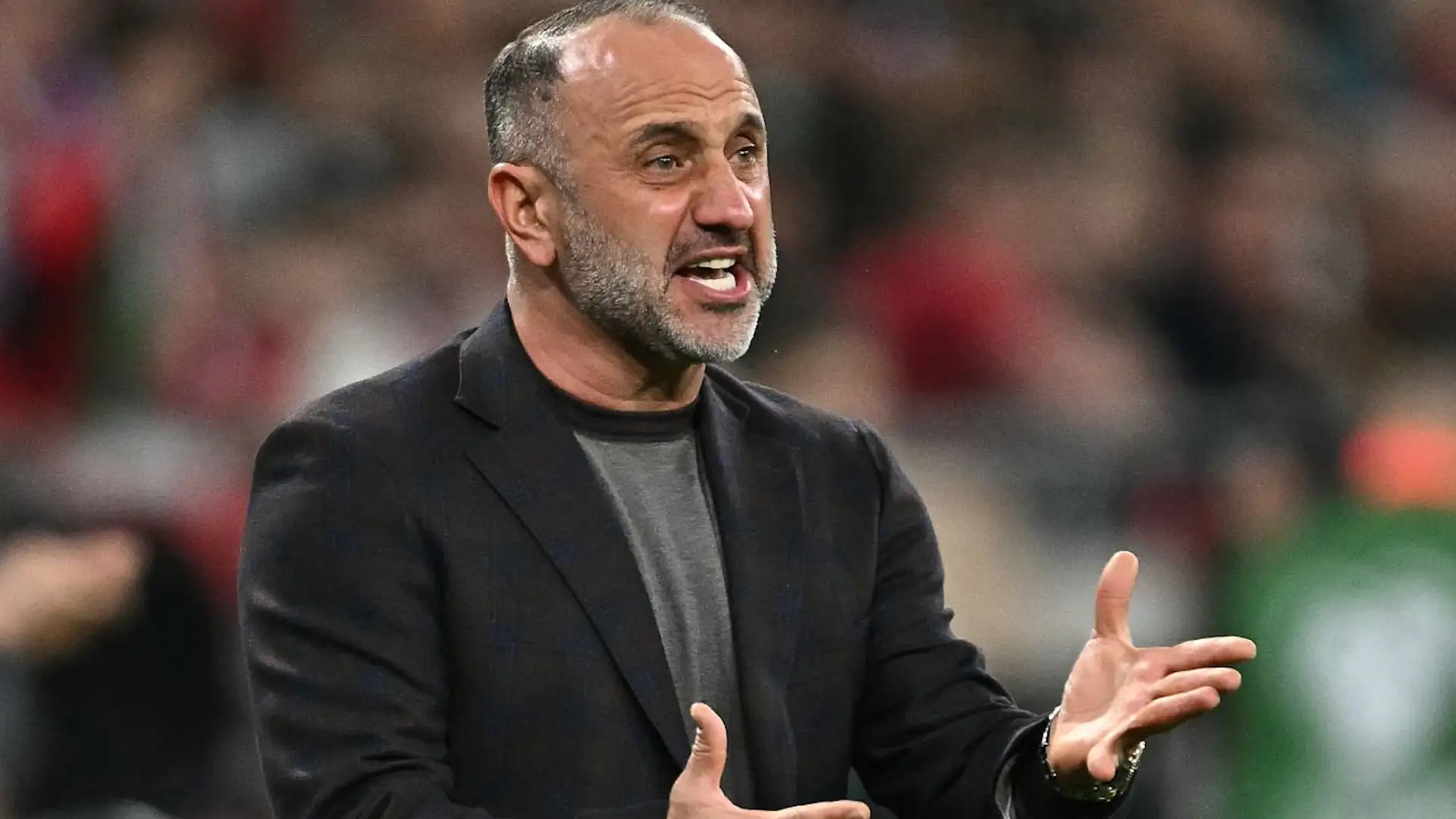
- Author: Vahe Hakobyan
- Sportaran
Armenia national team head coach Yeghishe Melikyan, in an interview with Joxovurd, spoke about the national team’s preparations for the start of the UEFA Nations League, personnel losses, the upcoming matches against Latvia and Montenegro, his trust in young players, and the prospects of Armenian football.
The coach also explained why he is disappointed with players who could help the national team but have refused to represent their country, and called on the government to take a more active role in developing football infrastructure.
The interview has been edited for clarity and readability while preserving the meaning of the answers.
“Our chances against Latvia are now 50-50”
— How ready are you and the players for the Nations League matches?
— I will be able to prepare the team psychologically, but our absences are causing major problems. Eight players are injured—I cannot remember anything like this even during my club career. In addition, five of the players called up are not getting regular playing time.
These are very serious losses, and I did not expect anything like this. But it is what it is. I am not giving up: I am preparing the team and motivating the players. However, motivation alone is not enough in football—the quality of the players is also extremely important, and that is something we will be missing. In any case, we will fight for victory.
— Who will play against Latvia?
— At the moment, I cannot say who will take the field. But I will do everything to make sure that those who do are ready to fight.
— How thoroughly have you studied Latvia’s style of play?
— We have studied all our opponents. They all have good squads, and we know them very well. Initially, we could have said that we had an advantage over Latvia in terms of player quality, but after our personnel losses, it is difficult to say that. The chances are now 50-50.
At this point, I cannot say exactly what condition our foreign-based players are in. We are only beginning to work with them and assess their current form.
— Do you have a separate plan for each opponent? Have you prepared anything special?
— Yes, we have a plan for every opponent—in fact, we have two plans for each match. Montenegro are a very good team. They have changed their coach, and he is doing a good job. Their squad includes players who compete and score goals in top leagues. So it certainly will not be easy for us.
— How willing are you to trust young players in the upcoming matches?
— I will give them opportunities, just as I have done since my first day in charge of the national team. You will definitely see young players on the pitch.
“Inexperienced players are better than experienced ones who have fled the battlefield”
— What were you thinking when you took charge of the national team after a series of setbacks, knowing that your first match would be against Portugal?
— I am not afraid of defeats. I knew that the national team was going through a difficult period, and I wanted to stand alongside the team at that moment. If you go to war, you should not be afraid to die. We are people who have seen war, who have won and lost, but who have not been broken.
I see football in the same way: we may win or lose, but whatever happens, we must keep moving forward. It is very important always to get back on your feet, not to lose heart, and to continue pursuing your goal.
But there is one thing that deeply disappoints me—when our footballers decide at some point that they no longer want to play for the national team. Their reasons and arguments are completely unacceptable to me.
— Who do you mean?
— I do not want to name names, but you have seen for yourselves the players who have recently retired from international football while continuing to play for their clubs. That means their health allows them to take the field, but they do not want to represent the national team. They give their reasons, but I do not understand them.
I played for the national team myself and witnessed many things. I remember Roman Khachatryan taking the field with such a swollen foot that he could not even put his boot on. I saw Artur Petrosyan play with a knee injury and give everything he had on the pitch, and Armen Shahgeldyan take the field with his leg bandaged. Those were the kinds of players I played alongside for the national team. I could name many others, including Sargis Hovsepyan, who gave everything he had to the national team until his final breath.
— Could some of the players be holding grudges?
— Let us talk about that as well—about both internal and external reasons. You know the story of how former federation president Ruben Hayrapetyan removed me from the national team and said that I would never play for it again. I was 27 years old and deeply hurt. But I know that I had made a mistake at the time, and he neither accepted nor forgave it. I was angry with everyone. I do not know another footballer who was treated in the same way.
A year and a half later, Vardan Minasyan called me before the match against Turkey and asked whether I was ready to play. I was so happy that I could not sleep for two days. I forgot every grievance—who had hurt me and why. I simply wanted to play for the national team. However, due to problems with my documents in Ukraine, I was ultimately unable to take the field.
Yeghishe Melikyan made 30 appearances for the Armenian national team.
— Why did you agree to return?
— Because of my love for my country and the national team. Today, I can say that the most important thing for the national team is to rid itself of players who refuse to play. In a way, I am even glad: let them leave, so that I know who I can go into battle with.
It is better to have inexperienced players than experienced ones who have fled the battlefield. I would rather teach young players to keep moving forward to the very end, with weapons in their hands. Those are exactly the kind of people I need.
I am very angry and upset, but let the team cleanse itself. The players give different reasons. Some claim that they had a conflict with me. But I have never had a conflict with anyone. Let them look me in the eye and say that there was a conflict between us.
If they are not coming because of their own reasons, then let them leave. I will build my own team. If I lose, so be it; if I win, all the better. At least I will know who I am walking this path with.
“Mkhitaryan is a national hero, but as the national team’s coach, I am disappointed”

— After the match against Portugal, you said that you had held talks about Henrikh Mkhitaryan’s possible return. What stage have those talks reached?
— I spoke to everyone and asked every one of them to play for the national team. I do not want to name names, but I am disappointed with all of them.
— Are you disappointed with Mkhitaryan as well?
— Listen, Mkhitaryan is a legendary footballer and a remarkable person—a hero of our nation. But as the national team’s head coach, it does not matter to me whether it is Mkhitaryan, Barseghyan, or someone else. If I do not see them with the national team but see them playing for their clubs, I am deeply disappointed—just like all the supporters.
I do not want to blame anyone: it is their right and their life. But I have the right to be disappointed because they could help the national team. I see the condition the team is currently in, and I believe that everyone capable of helping should do so. But that is not happening.
I do not deny that a player may be right or may have been treated unfairly. But that should not be taken out on the national team—it represents the country. I also had a serious conflict with the federation, but when it comes to the national team, all conflicts become irrelevant. The country’s national team comes before everything else.
It is like our country and our land: we have to fight for it. It does not matter whether you have problems with a governor or anyone else—you still have to go and fight for your country.
— Does that mean that selfishness is also a problem in football?
— Every footballer must understand that the national team does not belong to the federation president or the coach. It is the country’s team. It belongs to everyone—to children and to grandparents. A grandfather should be able to come to the stadium with his grandson and have something to celebrate. The national team belongs to the entire nation.
“After Portugal, nothing can frighten us anymore”
— Did you make any changes to your playing plans after the 9-1 defeat to Portugal?
— No, of course not. How could we change our approach to preparing for Latvia because of a match against Portugal? I knew perfectly well who we were going to face. I understood that our team was not yet ready to compete on equal terms with an opponent of that calibre, but we had to endure it.
Of course, we gained invaluable experience. Now nothing can frighten us anymore.
— What do you expect from the supporters after the Portugal match? The stadium was packed, but it seemed that many people came to see Cristiano Ronaldo. Did it put pressure on you to see Armenian fans supporting the opposition?
— I cannot reproach them for that because a global star had come to Armenia. We have to win the supporters’ hearts ourselves—through our performances and victories.
We have loyal supporters, and there are many of them. They stayed with the team through its most difficult periods. I saw them after the defeat: they remained by our side and accepted what had happened. As for those who are not yet with us, we have only ourselves to blame. We need to earn their trust. But the supporters must also work on themselves and not turn their backs on the national team.
I would also like to say something about the clubs. There is one club—I will not name it—with a player whom I very much want to call up to the national team. But the club does not give him playing time and does not put him on the field. As a result, the national team suffers.
The supporters should get involved and demand that these footballers be allowed to play. I cannot personally speak about every club. There are journalists and supporters—why are they silent about this? You can all help. I am not saying this without reason: there are real examples.
When I worked at Pyunik, the club’s president at the time asked me to use Armenian players more often so that they could eventually play for the national team. He did not want to interfere in my work, but that was his wish, and I took it into account.
Even during serious conflicts with the federation, I tried to send as many players as possible to the national team. Regardless of any disagreements, everyone should help the national team in whatever way they can. The clubs may currently have conflicts or personal reasons of their own. I do not know why they are acting this way, but none of that should be brought into matters concerning the national team.
“Football cannot develop without a government programme”
— How do you explain your success with Pyunik and the lack of results with the national team at this stage?
— First and foremost, I had much more time at the club. If I could hold a month-long training camp with the national team, we would have a different team. But that is impossible.
The match will take place on September 25, and we only came together on the 21st. I understand that this is a national team and that every national side faces the same situation.
In addition, we are currently undergoing a generational transition. There are not many experienced players in the team. For example, I can explain everything to Tiknizyan and Spertsyan with a single word, but it is more difficult with the younger players. They need time to understand our football philosophy.
— There is a popular view in Armenia that we should not bother with football because the sport has no future in the country and nothing will come of it anyway. What do you think about that?
— That is what people who think too superficially say. We lived in a state of war for 30 years—the country had no time for football. The government’s programme did not include any plan whatsoever for developing the sport. Football cannot develop without a government programme. We may achieve an isolated success, but nothing will change in the long term.
Our only stadium is almost 100 years old. We like comparing ourselves to other countries—Georgia, for example. Do you know how many stadiums the Georgian government has built? We have one stadium; everything else is just a football field. We need infrastructure.
Thank God, Noah are now building their own infrastructure and stadium, and there are other private investors as well. But that is not enough—the government must approach this systematically and on a large scale.
— Who do you expect support from?
— From the government and the prime minister. They should love football, care about it, and introduce development programmes.
I think I need to win several matches and then go and explain exactly what needs to be done. Our nation needs joy and success, and football provides both. The government must care about people and lift their spirits.
I often see concerts and other events being organised. They lift people’s spirits, and that is a good thing. But football can do that ten times more powerfully and for much longer.
I understand that we need motivation and victories to demonstrate all of this. But without support, it will be difficult to achieve serious results and prove anything. Investment must come first, and only then can demands be made. Right now, everyone loves making demands—we will see that on September 25—but nobody thinks about how success can actually be achieved.
We have enormous problems in youth football and do not have proper conditions. The federation sees it, and so do I. We are asking the government for support, but everything is moving very slowly and requires a great deal of effort.
— Under the current circumstances, should we expect new stars to emerge?
— They will not emerge in large numbers, but a few outstanding individuals may develop. Karlen Hovhannisyan, for example, is already scoring goals in Russia. Had it not been for the national team, perhaps nobody would have noticed or signed him. I gave him a chance, he was noticed, and he was bought for a substantial fee.
The same applies to Narek Hovhannisyan. I am doing everything I can to help young players develop through the national team. I took a risk by putting them on the pitch, but that risk was justified. We have not yet achieved major results as a team, but there have already been individual successes.
However, it is wrong to leave all of this solely to me or to other coaches. There must be a comprehensive development programme.
The full interview is available at this LINK.