Who Will Replace Spertsyan and How Will Armenia Play Against Cyprus? Tactical Analysis and Predicted Lineup
- Author: Vahe Hakobyan
- Sportaran
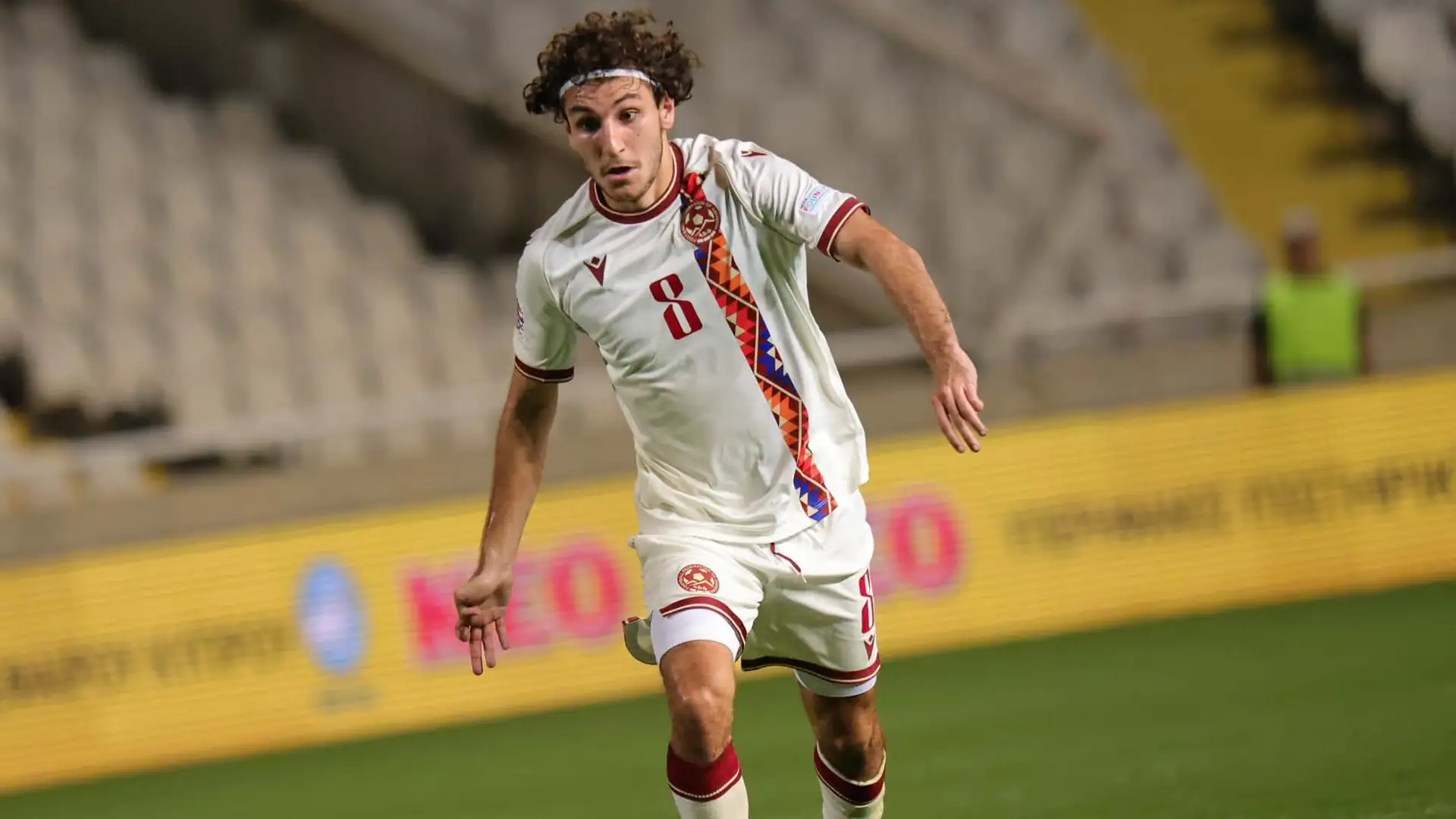
On November 12, Armenia will host Cyprus in Matchday 5 of Group C2 in the 2026/27 UEFA Nations League. The biggest challenge facing Yeghishe Melikyan's team ahead of the match is the absence of injured captain Eduard Spertsyan. There is no direct replacement for Armenia's key player, meaning the national team will likely have to make significant changes to its attacking approach.
The match will take place at the Vazgen Sargsyan Republican Stadium in Yerevan, with kick-off scheduled for 21:00 local time.
Both teams enter the match with personnel problems, but Spertsyan's absence could prove particularly decisive for Armenia. The captain has been not only one of the team's main creative forces but also a player capable of carrying the ball through central areas, creating attacking opportunities and linking midfield with the forward line.
In this pre-match analysis, Sportaran examines who could take over Spertsyan's responsibilities, which tactical approach Yeghishe Melikyan might choose and what Armenia's starting lineup could look like.
Melikyan's Focus on Youth: Eight Players Under 23
During his pre-match press conference, Yeghishe Melikyan revealed that Armenia's starting lineup would feature eight outfield players under the age of 23.
This means that only two of the ten outfield players will be older than 23. The most likely candidates are left-back Nair Tiknizyan and defensive midfielder Ugochukwu Iwu.
This suggests that young midfielder Karlen Hovhannisyan could partner Iwu in central midfield.
However, that combination raises some tactical questions. Iwu and Hovhannisyan are players with similar profiles, primarily focused on physical duels, ball recovery and controlling space. In previous matches, they have generally replaced one another rather than played together.
In theory, Hovhannisyan could take on some playmaking responsibilities. He possesses a good range of long passing, can switch the direction of attacks and deliver accurate diagonal balls. However, replacing Spertsyan's ability to progress the ball through dribbling and create chances between the lines will be extremely difficult.
As a result, Armenia will most likely have to play a completely different style of football without Spertsyan.
Why Ranos Could Struggle Without Spertsyan
One of the few players in Armenia's squad capable of carrying the ball through central areas with his dribbling is Grant-Leon Ranos. At least when at his best, the striker has repeatedly demonstrated these qualities.
However, this creates a tactical dilemma.
If Ranos starts as the central striker and regularly drops deep to receive the ball, Armenia could be left without a player occupying the penalty area to finish attacks.
The expected wide attackers, Narek Hovhannisyan and Artur Serobyan, are most comfortable operating in open spaces, progressing the ball down the flanks and working around the edge of the penalty area. Constant runs behind defenders and movement into central finishing positions are not among their main strengths.
Furthermore, Ranos prefers combination football built around short passes, one-twos, quick exchanges and movement between the lines.
These were precisely the types of combinations that previously worked well between Ranos and Spertsyan. The captain could find the striker with well-timed passes, participate in attacking combinations and create space.
Without that connection, Ranos' effectiveness could drop noticeably.
Therefore, despite his individual qualities, starting Ranos may not necessarily be the optimal solution.
Gharibyan or Miranyan: Who Fits the New System Better?
Under the current circumstances, Artur Gharibyan appears to be the more logical option to start. The more experienced Artur Miranyan is another possibility.
Both strikers could offer Armenia a different attacking style.
Without Spertsyan, Armenia will likely find it more difficult to consistently break down the opposition through short passing combinations in central areas. As a result, attacks down the flanks, crosses and long passes from defenders towards the central striker could become the team's main methods of progressing the ball.
In such a system, a striker capable of challenging central defenders, winning aerial duels, holding up the ball and bringing teammates into play becomes particularly important.
Standing 192 cm tall, Gharibyan has the physical attributes and playing characteristics suited to this approach. However, the young forward is still some way from peak fitness, which could influence the coaching staff's decision.
Miranyan is also capable of playing as a target man, providing a focal point for Armenia's more direct attacks.
Another possibility is that Gharibyan and Miranyan share playing time, with each featuring for approximately one half.
Ranos, meanwhile, could be especially valuable in the second half when Armenia may need to change its attacking approach.
If Armenia are trailing, Melikyan could switch to a two-striker formation, introducing Ranos alongside a central forward. Alternatively, he could deploy Ranos in a wide attacking position with the freedom to move inside.
Iwu and Hovhannisyan Could Be the Key to Quick Attacks
Despite their somewhat similar playing characteristics, a midfield partnership between Iwu and Karlen Hovhannisyan also offers significant advantages.
Both players are strong in physical challenges, capable of breaking up opposition attacks and actively competing for loose balls.
These qualities could be especially useful in a more direct style of play.
If Armenia's defenders frequently play long balls forward, the central midfielders will be responsible for collecting second balls and launching follow-up attacks.
Iwu and Hovhannisyan could give Armenia an advantage in second-ball situations, while also helping the team regain possession quickly after losing it.
Hovhannisyan could also play an important role in switching play from one flank to the other. His diagonal passes would allow Armenia to exploit the pace of its wide players and stretch Cyprus' defensive structure.
Therefore, Armenia's most promising approach could involve quick transitions from defence to attack, active use of the flanks and intense competition for second balls.
This style might be less attractive from a combination-play perspective, but it could make better use of the qualities of the players currently available to Melikyan.
Armenia's Predicted Starting Lineup Against Cyprus
Formation: 5-2-2-1 (3-4-2-1 in possession).
-
Goalkeeper: Ognjen Čančarević.
-
Defenders: Artyom Bandikyan, Georgiy Harutyunyan, Styopa Mkrtchyan, Erik Piloyan, Nair Tiknizyan.
-
Central midfielders: Ugochukwu Iwu, Karlen Hovhannisyan.
-
Inside forwards: Artur Serobyan, Narek Hovhannisyan.
-
Striker: Artur Gharibyan.
This is Sportaran's predicted lineup, not the officially confirmed starting XI.
In this formation, Tiknizyan would be able to push forward actively from the left, while Serobyan and Narek Hovhannisyan could exploit space on the flanks and in the half-spaces.
Armenia's main challenge will be to compensate for Spertsyan's absence not by searching for a like-for-like replacement, but by changing the entire structure of its attacking play.
Armenia will likely have to move away from its traditional reliance on a central playmaker and instead focus on collective effort, quick transitions and more direct football.
Whether this approach proves effective will become clear in the November 12 match against Cyprus.
Melikyan Ahead of Armenia vs Cyprus: "Eight Players Under 23 Will Start"
Discuss the news!
Jump to comments ↓
Comments
0